
11 Best Sensory Bin Ideas for Toddlers
11 Best Sensory Bin Ideas for Toddlers
Dry, sealed pantry staples win on longevity. Chickpeas, black beans, lentils, and rice are the standouts on this list... one parent-blogger reported reusing the same batch of dyed rice into its second year of play when stored dry and sealed, and dried chickpeas are shelf-stable for approximately two years unopened. They hold up because they don't mould as long as moisture stays out.
Let's look closely at 11 sensory bin ideas you can use as a base that last longer than you would think! One of the easiest ways to buy yourself twenty focused minutes and hand your toddler something genuinely good for their hands and brain at the same time. The fillers that last longest tend to share three things: they're dry rather than wet,
they store in an airtight container,
and they don't spoil, mould, or melt between uses,
which is exactly why pantry staples like rice, beans, and lentils dominate this list.
Before we get into it: every single one of these bases needs a parent within arm's reach the whole time. That doesn't mean hovering with a clipboard. Bring your coffee, pull up a chair, stay in the room. But stay close and stay watching, especially with anything small enough to swallow or anything wet. Toddlers can choke or drown in seconds, and it's silent, there's no gasping or splashing to alert you. So: coffee yes, eyes off never.
11. Black beans
Hard, dry, and reusable pretty much indefinitely if you keep them sealed and dry between uses.
Their dark colour makes a nice contrast base for counting activities or "night sky" themed play. Same choking caution applies: dried beans aren't appropriate for children who still put things in their mouths, and should always be supervised closely regardless of age.
10. Rice
Probably the most reliable bin filler out there.
It's cheap, comes in different colours and grain types (white, brown, black, wild), and holds up to repeated play for a long time, some parents report reusing the same batch of dyed rice for a year or more when it's stored dry in a sealed container. If your child is still an explorer-by-mouth, rice is one of the gentler choices since small amounts are safe if swallowed, though it's still not meant to be eaten.
9. Chickpeas (dried, uncooked)
These are a sensory bin classic for a reason...
That pale, round shape works beautifully as pretend sand, seeds, or even "eggs" for an animal-themed bin. Dye a batch and use them for colour sorting, or leave them natural for a desert or beach scene. Store them dry in an airtight container or zip-lock bag and they'll keep for months, even years, dried chickpeas are shelf-stable for a couple of years when kept dry. One important flag: whole dried chickpeas are a choking hazard for children who are still mouthing objects, so this base is best kept for children who are past that stage and always under close supervision.
8. Old cereal
The perfect use for that half-stale box hiding at the back of the pantry. Stale cereal is still safe to use as long as it isn't mouldy, damp, or smelling off, texture and crunch fade before safety does. It's fully taste-safe, which makes it a favourite for toddlers who haven't outgrown the mouthing stage, and you can dye it in batches for extra colour sorting. Store it dry and sealed; once it's genuinely spoiled (mould, bugs, rancid smell), it's time for a fresh box.
7. Moon dough
This is the "why did I wait so long to make this" one.
It's just cornflour and oil, mixed until it's crumbly but holds together when pressed, perfect for craters, sculpting, or just squeezing. A simple starting recipe is 8 cups of flour to 1 cup of oil (use a cooking oil like vegetable or coconut oil rather than baby oil if you want it taste-safe for a mouther), you can find a version of this recipe at Little Bins for Little Hands. Store it in an airtight container in a cool, dry spot and it'll last several weeks to a couple of months, if it starts to dry out, just knead in a little more oil. If it ever gets contaminated with food or looks off, bin it and start fresh rather than trying to save it. Find how to make moon dough here!
6. Wheat bran
This one is less documented online as a sensory bin filler than the others on this list, so treat it as an experiment rather than a tested favourite. Its dry, gritty texture is similar to cornmeal or oat bran, both of which are popular. If you want to try it, start with a small batch outside, store it the same way you would rice or oats (airtight, cool, dry), and keep a close eye on how your toddler responds to the texture before committing to a full bin. Although unusual, I love using this for the texture!
6. Frozen pompoms
Freeze pompoms in water overnight (an ice cube tray works well), then let your toddler "rescue" them with warm water in a squeeze bottle. It's a genuinely absorbing activity, some parents report a solid 30 to 45 minutes of focused play as the ice melts. The good news is the pompoms themselves are reusable indefinitely; just squeeze out the water, let them dry on a towel, and freeze them again next time. This activity is great because it's like 2 in 1. Once those pompoms have melted, take a lemon squeezer and squeeze the water out or add a spaghetti strainer and fish them out. Double the fun!
4. Water
The simplest base of all, and still one of the best, add cups, a funnel, some floating toys, and you're done. But this is the one that needs the most attention from you, not less. Toddlers can drown in as little as an inch of water, and it can happen in under thirty seconds without a sound. Never step away, even briefly, and empty the bin the moment play is finished rather than leaving it sitting around.
3. Old bouquet (flower petals)
A lovely, low-cost way to use flowers that are on their way out anyway. Pull the petals off (great fine motor practice on its own), then let your toddler explore them dry, or float them in a water bin for a "petal soup" sensory experience. This one is a single-session base, petals wilt and brown quickly, so there's no real storage step, just compost them once play is done. One thing I couldn't verify with a solid source: whether store-bought florist flowers carry pesticide residue that would matter for a toddler handling them.
2. Dry lentils
Rounding out the list with another dry, durable pantry staple. Lentils are small, but they scoop and pour beautifully and work well for counting or transferring activities with spoons and tongs. Like chickpeas and black beans, they'll last indefinitely if kept dry and sealed, but the same choking caution applies, this is a base for children past the mouthing stage, with an adult close by the entire time.
1. Foam (dish soap and water)
Whisk a small amount of dish soap with water until it turns thick and fluffy, and you've got an instant sensory foam bin. It's genuinely quick to make, but it doesn't last long — most parents find their foam holds its fluffiness for somewhere between 30 minutes and an hour before it deflates back into soapy water. It also isn't taste-safe unless you swap in a tear-free baby soap, so for toddlers who still mouth things, keep this one for closely supervised sessions only, or consider the bean-water ("aquafaba") version as a taste-safe alternative. There's nothing to store here — make a fresh batch each time you play.
Frequently Asked Questions
How long do sensory bin fillers last? It depends on the filler. Dry pantry staples like rice, chickpeas, black beans, and lentils can last for months to years if stored in an airtight container away from moisture. Homemade doughs like moon dough last several weeks to a couple of months if stored airtight and refreshed with a little oil as needed. Wet or perishable fillers — water, soap foam, flower petals — are generally single-session and don't store at all.
What's the safest sensory bin filler for a toddler who still puts things in their mouth? Taste-safe options are best here: dry rice (safe in small amounts if swallowed, though not meant to be eaten), stale cereal, and taste-safe moon dough made with a cooking oil rather than baby oil. Dried chickpeas, black beans, lentils, and pompoms are choking hazards and are better suited to children who are past the mouthing stage.
Can I reuse dry sensory bin fillers like rice or beans? Yes — dry fillers like rice, chickpeas, black beans, and lentils can be reused many times over, sometimes for a year or longer, as long as you store them dry and sealed between uses and discard them if they ever get damp, mouldy, or contaminated with food.
Hey, Let's Play!
Making the dough is the easy part. The hard part is deciding what to do with your toddler every single day. That is the part we take off your plate.
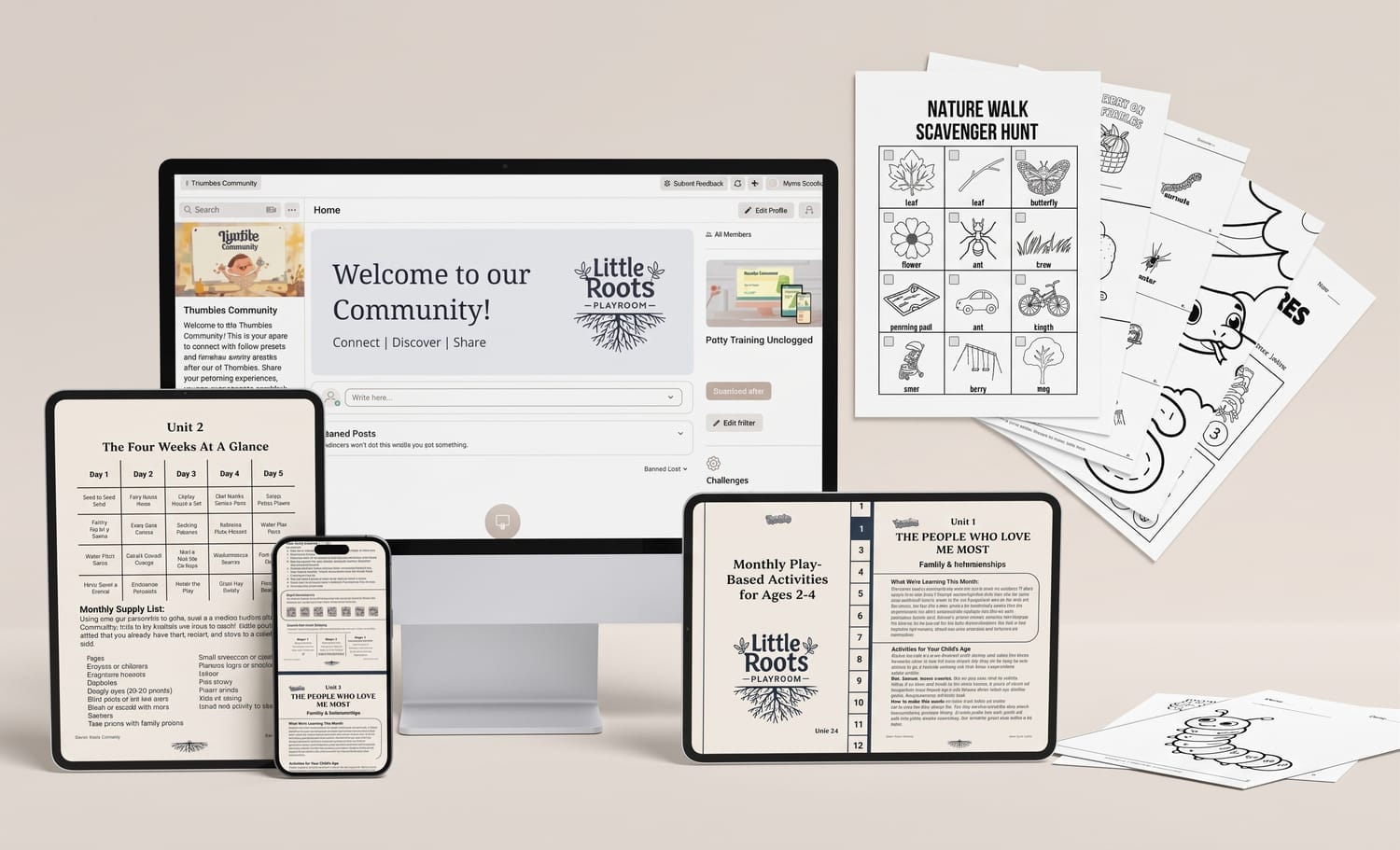
Little Roots Playroom gives you simple, low-prep play ideas for ages 2 to 4, using things you already have at home. No clutter. No guessing. Just open it and play.
Come join us and see how light your days can feel.

© Created with systeme.io